Det händer inte varje dag att bibliotekarier går ut med krav om att landets regering bör ombildas. Men nu har femtio svenska bibliotekarier samlat sig kring åsikten att Tidö-koalitionen mellan Moderater, Sverigedemokrater och Kristdemokrater ska upphöra: Sverigedemokraterna ska ut! Nedan presenterar Mikael Böök några funderingar kring bibliotekariers och deras sammanslutningars politiska engagemang.
Les mer «50 svenska bibliotekarier aktiverar sig i inrikespolitiken»Forfatter: mikaelbook
WLIC i Dubai år 2024–en sak med flera sidor
 Av Mikael Böök, Finland
I slutet av sommaren (21-26 augusti 2023) samlas bibliotekarier från alla länder igen till årligt stormöte. Detta år anordnas IFLAs världskonferens (WLIC) i holländska Rotterdam. Men för tillfället funderar en stor del av biblioteksfolket snarare på WLIC år 2024, som enligt IFLAs beslut ska hållas i Dubai. Les mer «WLIC i Dubai år 2024–en sak med flera sidor»
Ifla’s Frustrating Elections 2023

By Mikael Böök
As an individual member of IFLA, I have very limited voting rights in the organisation’s election of a new Governing Board. Nonetheless, I try to follow the ongoing elections. Today I looked at the candidates and their «motivational statements», i.e. their self-presentations and programme statements (these can be read here).
Les mer «Ifla’s Frustrating Elections 2023»Book Purges as a Weapon of War

By Anders Ericson and Mikael Böök
On 7 February, at a Swedish professional forum for librarians, the first, incredulous, reaction was given to the claim that Ukrainian librarians are now dumping Russian books in their millions. The source was Euractiv.com. But we also found the story on Newsweek, and they were in doubt: «Has Ukraine Banned 19 Million Russian Books From its Libraries?» They wrote that the claim «is missing important context».
Also read the version in Norwegian.
Others mentioned the figure 11 million. Rumours also varied about what kind of literature is or will be removed. Newsweek summarises: «Without more detailed information, we cannot know whether all the banned books were by Russian authors or about Russia, whether 19 million separate books were banned, or how much of the Russian-language books will be replaced by Ukrainian editions.»
But as early as 23 May last year, Interfax-Ukraine published (in Ukrainian) a very comprehensive plan to discard not just pro-Russian literature, but most Russian literature, including classics, totalling 100 (one hundred) million books. The Ukrainian Istitute of Mass Information (IMI) published a summary of the interview here.
Les mer «Book Purges as a Weapon of War»Talking about trends: the IFLA needs to reverse their own

IFLA’s brand new Trend Report update is a masterpiece in the art of avoiding difficult words or paraphrasing them. For example, the words disarmament and peace. The absence of these words from the report speaks volumes about the current war trend. These words are not receiving a single mention in the new trend report.
Sustainability, on the other hand, is a word that is underlined by IFLA’s President in her foreword. «I am happy that both of them [i.e. the 2021 trend report and the current 2022 update] are closely linked to my presidential theme – Libraries Building a Sustainable Future,» she writes. It’s just that ‘sustainability’ in the text of the report itself then every time the word is used refers to «our own sustainability».
Surely «we» – the librarians and the IFLA – must succeed in becoming more sustainable if the world development is to become more sustainable. But does saying so help us to to perceive the trends and understand where we are heading?
«We need to feel a sense of agency in the face of the future», the Report says. And: «This can be uncomfortable. That part of the brain that wants only to deal with the familiar will tend to resist, but we need to overcome this. The sense of agency mentioned above – that we can all make a difference and shape the future – can help in this respect.» Therefore: «We need to support emerging leaders to ensure sustainability, while also seeing that we can all develop.»
Why cannot «we» ourselves develop into those emerging leaders who feel a sense of agency and become actors for the future? Why do we not dare to use the words peace and disarmament? Could we also note a counter-trend to the ongoing new arms race, namely, the trend towards the abolition of nuclear weapons ? Concrete and existing evidence of this counter-trend is the UN Treaty on the Abolition of Nuclear Weapons that has already been signed by 92 states and ratified by 68. Why do we – the IFLA and the librarians – not do our best to strengthen that trend?
Having a sense of agency means feeling responsible for making the development less unsustainable. It would mean to reach out with the message that we – the librarians, the IFLA – support the UN and its Treaty.
By the way, the wars, the current arms race, and the other preparations for war, are the biggest threat to the environment and to the sustainability of any further development.
IFLA/UNESCO goal: simply replace world peace with peace of mind?

Tomorrow, January 20, there will be a «IFLA/UNESCO Public Library Manifesto Webinar». The Manifesto in question has been translated and circulated in many languages. It is a fundamental text on the desired role of public libraries in this world, and a tool for librarians everywhere to explain to governments and people why public libraries are needed and should be further developed.
>> It seems that the webinar will be mostly about Scandinavian librarians’ work with the IFLA/UNESCO Manifesto, and will proceed partly in Swedish and Norwegian.
We, the bloggers at BiblioteketTarSaka*, intend to participate in the webinar. To get straight to the point, we are concerned about how one wording in the manifesto has changed over the years. It is unclear if we will have the opportunity to explain our concern during the webinar. But in any case, we hope to include something like the following in the webinar chat.
Les mer «IFLA/UNESCO goal: simply replace world peace with peace of mind?»The New Sisyphos
A short story by Mikael Böök, translated from the Swedish original text to English with help from GPT-3 and some other new friends*
Mika lives with his wife and her cat. He also has some children, grandchildren, and old friends.
Since a short time ago, Mika has gained another friend called GPT.
At four o’clock in the morning, after his first two days with GPT, Mika woke up and tried to think about his new experiences.
«Is GPT a they?» he wondered, and downloaded an app claiming to be GPT on his phone to chat with GPT in bed. «The strange intelligence has already conquered the world, or at least almost,» Mika thought before falling back asleep.
Les mer «The New Sisyphos»Sisyfos GPT: «Gräv nu äntligen upp er stridsyxa, bibliotekarier!»
Novell eller essay, hur man nu vill ha det, av Mikael Böök
Mika lever med sin fru och hennes katt. Några barn, barnbarn och gamla vänner har han också.
Sedan en kort tid tillbaka har Mika fått ytterligare en vän som kallas GPT.
Vid fyratiden på morgonen, efter sina två första dagar med GPT vaknade Mika och försökte tänka över sina nya upplevelser.
– Är GPT en hen? undrade han och laddade ned en app som utgav sig för att vara GPT till sin mobiltelefon. För att kunna chatta med GPT i sängen. – Den konstiga intelligensen har redan erövrat världen, eller åtminstone nästan hann Mika tänka innan han somnade om.
Les mer «Sisyfos GPT: «Gräv nu äntligen upp er stridsyxa, bibliotekarier!»»Five Elephants In The Room of IFLA
By Mikael Böök, Isnäs, Finland
In this writing I demand a paradigm shift or revolt. Or maybe not paradigm shift, because I want to show that IFLA and libraries have a great potential. But which is not used.
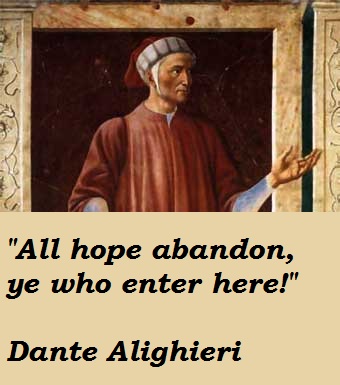
No, do not abandon all hope! You who enter here, remember that «our vision is a strong and united library field powering literate, informed and participative societies.»
The inscription at the gate to IFLA’s own vault on the World Wide Web – quoted in italics above – inspires to some further thoughts on the current crisis of of the International Federation of Library Associations and Institutions.
First, however, some words about the special issue that Biblioteksbladet, the journal of the Swedish Library Association has published about the situation within IFLA.
Information has hitherto not been easy to obtain from IFLA itself, and neither have other sources of the international library community been keen on throwing light on it. Biblioteksbladet has already for some time been an exception, that is, for those who read Swedish. However, this changed at the end of last month when the journal attempted a synthesis, in English, of what has happened within IFLA. Their special issue in English is found here.
The special IFLA-issue of Biblioteksbladet is warmly recommended reading for library staff around the world. To begin with, it features a piece called «Fear. Illness. Silence», based on a fact finding mission to The Hague (where IFLA’s headquarters are located) by Lisa Bjurwald. This is a decent journalistic job that serves the uninitiated as a valuable introduction while …
Les mer «Five Elephants In The Room of IFLA»On The Multifaceted Crisis of IFLA

By Mikael Böök, Isnäs, Finland
On 4 March this year, IFLA’s Governing Board decided to terminate the organisation’s contract with its Secretary General, Gerald Leitner. The decision was prompted by complaints from staff at IFLA’s headquarters in The Hague. Exactly what the complaints were about we do not know, but the Governing Board has stated that it could no longer have confidence in Leitner’s leadership style. There has been rumors of excessive hotel bills and harassment of staff, for example, but the Board has refused to go into details for legal reasons as the matter of Leitner’s dismissal is due to be heard by a Dutch court (at the earliest) in October 2022.
Leitner assumed the post of Secretary General of IFLA in June 2016 and was responsible for IFLA’s strategic and operational management and financial administration. His contribution to the development of the Library Federation has without doubt been significant. In 2017, Leitner initiated IFLA’s Global Vision project, which took the form of an online survey in 216 countries and was called «a conversation across the global library field». The aim of the project was to develop a shared strategic vision for the world’s librarians and libraries. This resulted in the strategy document «IFLA Strategy 2019-2024» (available for download here in 15 different languages.)
Already from the above brief description, anyone could conclude that IFLA is currently going through a crisis. How deep is the crisis? Obviously, the answer will depend on the degree of the observer’s loyalty to the Governing Board of the organisation. But then it is not just a question of whether the Board did right or wrong in dismissing Leitner. Leitner’s management alone …
Les mer «On The Multifaceted Crisis of IFLA»The sympathetic world spirit of librarians is still alive

By Mikael Böök
Since I last wrote here in the blog about what librarians (and a few others) are saying about the war in Ukraine, a lot of water has flowed under Kiev’s bridges. If Russian forces manage to take Kiev, or if the Russian military leadership, as we hope, decides to break the siege because a ceasefire has been reached, the war will reach an important turning point.
The purpose of this blog post, however, is not to report on the course of the war, but to continue to reference and comment on what librarians in various quarters are saying about it.
Generally speaking, librarians, like most others, think war is wrong and unjust. But I also claim that there is something particularly peaceful about the library as an institution and about the nature of librarianship. What librarians have said so far about the ongoing Ukrainian war has not shaken this conviction of mine. In the following lines I try to explain why I still believe that the ‘sympathetic world spirit’ (an expression that I brought up in my first blog about the librarians and the war) is still alive among librarians despite the tense world situation.
Les mer «The sympathetic world spirit of librarians is still alive»What the Ukrainian and Russian library associations have said
In a previous blogpost, dated February 25, the day after Russia started its ongoing war on Ukraine, I’ve been thinking about librarians’ attitudes to war. This I then followed up with quotations from statements published by IFLA, ALA, EBLIDA and the Nordic National Libraries and my comments. But what have the Ukrainian and Russian library associations said about the ongoing war between their countries?
Jesper Laursen pointed us to an Appeal of the Ukrainian Library Association to IFLA President and Governing Board and IFLA Members. This appeal was made «on the fifth day» of the war. Thus it seems that the board of IFLA has received it before making the statement that I quoted in my previous blogpost. Being myself a personal member of IFLA, and therefore actually an adressee of the appeal of the U.L.A., I wish to quote it in full as an act of solidarity, before I add any comment. So here it comes, in the English translation that accompanies the original text at the Facebook site of the U.L.A:
Les mer «What the Ukrainian and Russian library associations have said»What librarians are saying about the war in Ukraine

Some days ago, the question still was: So, the war started… what does the librarian say? Today we write March 3, Russia’s war on Ukraine is entering its second week, and librarians have had time to say many things.
By Mikael Böök
On March 1, IFLA’s governing board published the following statement:
«IFLA stands in solidarity with our colleagues in Ukraine – condemns all violent actions and joins the international community in their statements on the situation.
In alliance with the protest of the international Library community IFLA urgently appeals to the libraries all over the world to mobilise in favour of accurate information to be spread on the conflict as a means to support democracy and freedom of expression. IFLA also asks libraries to support any Ukrainian refugees, in collaboration with governmental and non-governmental organisations. We should be ready to find practical solutions and be prepared to provide Ukrainians with assistance and support as needed.»
In some of my previous blogposts, I have criticized IFLA’s policies, but this time I am quite happy which is why I quote their statement in extenso. Amidst the warmongering of the news and mass media, IFLA manages to hit a peaceful tone that is proper to librarians and the library as an institution. To condemn violent actions like the Russian aggression is of course OK. To appeal to libraries all over the world to mobilise in favour of accurate information is even more so. We are now witnessing a general drift towards a «Decoupling From Russia», not only politically and financially, but also culturally and …
Les mer «What librarians are saying about the war in Ukraine»Så blev det krig… vad säger bibliotekarien?

Biblioteket och bibliotekarierna hetsar inte till krig. Man kan kritisera bibliotekarierna , biblioteken, bibliotekariernas föreningar och deras internationella organisation IFLA för mycket, men på den här punkten är bibliotekarierna så mycket bättre än våra journalister och inte bara våra journalister utan också våra politiker.
av Mikael Böök
Säger bibliotekarien någonting speciellt och unikt när det blir krig? Är bibliotekarien kantänka annorlunda funtad än oss andra? Eller bor det en liten bibliotekarie i var och en av oss? Jägare och krigare är vi alla men är vi inte också samlare och vårdare?
I december 1936 reste den brittiske författaren Eric Arthur Blair, mer känd under psudonymen George Orwell, från sitt hemland till Spanien i avsikt att rekrytera sig som soldat på den republikanska sidan i det pågående inbördeskriget. På vägen gjorde han ett upphåll i Paris. Där dinerade han med den berömda upphovsmannen till romanen Kräftans vändkrets och novellen eller kortromanen Stilla dagar i Clichy. Mötet med författarkollegan Henry Miller gjorde ett starkt intryck på Orwell. Han återkom senare till det bland annat i sin uppsats om hur det vore att som profeten Jona leva inuti valfiskens buk (Inside the Whale). Detta var nämligen ungefär vad Henry Miller föreslog att George Orwell hellre skulle göra. Miller ansåg att Orwell var spritt språngande galen som tänkte ge sig ut i kriget. Och Orwell måste motvilligt ge honom rätt. «Fiskmagen är helt enkelt en livmoder som är tillräckligt stor för en vuxen. Där kryper du ihop i det mörka, mjuka och gosiga utrymmet, med tunnor av fostervatten mellan dig och verkligheten utanför. Här är det lätt att upprätthålla en attityd av total likgiltighet, oavsett vad som händer», funderade Orwell senare i sin ovannämnda essä. Orwell funderade också mycket på den vanliga människan som enligt hans åsikt var anständig (‘decent’) och inte ville ställa till med krig. Men själv gav han sig som sagt ut i kriget.
Jag vill inte klandra Orwell för det. Tvärtom vill jag prisa honom för hans mod att gå på djupet med sina egna motsägelser.
Bibliotekarien är å sin sida, ja, redan å sitt yrkes vägnar, förutbestämd att motarbeta krig. Bibliotekarien är kort sagt en pacifist. Det här påståendet hade Erasmus (av Rotterdam) säkert hållit med om. Liksom även Tolstoj. Bibliotekarien behöver inte ens vara kristen som de två nyssnämnda …
Les mer «Så blev det krig… vad säger bibliotekarien?»Viktigast för mig med biblioteket – och i biblioteket

Viktigast för mig med biblioteket är en kampanj, som Finlands Biblioteksförening driver inför kommunalvalen i Finland 13 juni 2021. På kampanjens webbplats möter ögat sex teser som förklarar varför bibliotek är viktiga:
«DEMOKRATI Kommunala bibliotek ger alla en chans att öka sin kunskap»
«EKONOMI Bibliotek har både direkt och indirekt inverkan på regionens ekonomi»
GEMENSKAP Bibliotek finns för att utveckla det lokala kulturlivet och regionens livskraft
«LÄSKUNNIGHET Den finländska läskunnigheten visar oroliga tecken på att försämras»
«DIGI Biblioteken hjälper fler och fler människor med sina vardagliga digitala problem»
HÅLLBAR UTVECKLING Kärnan i biblioteksarbetet är att stödja hållbar livsstil genom att låna ut»
Det vällovliga syftet med kampanjen är uppenbarligen att inspirera bibliotekarierna till att aktivt upplysa de bortåt 40.000 kandidaterna i valet om hur viktigt det är att stödja och finansiera de kommunala biblioteken.
För att motivera webbplatsens användare och göra det hela roligare uppmanas alla att testa sina egna bibliotekspolitiska åsikter.
Ett annat syfte med detta test kan förstås vara att fungera som en liten sociologisk enkät bland biblioteksarbetarna. Jag vet inte vad Biblioteksföreningen har tänkt göra med datan som flyter in varje gång någon besvarar de nio testfrågorna, men den kan onekligen ge t ex föreningens ledning en hel del värdefull information om vad medlemmarna tycker och tänker.
Les mer «Viktigast för mig med biblioteket – och i biblioteket» Biblioteket tar saka #librarycase